Effectiveness Test of Ethanol Extract of Buni Leaves (Antidesma bunius (L.) Spreng) Ointment for Healing Grade II (A) Burns in Male
DOI:
https://doi.org/10.36733/usadha.v5i1.13940Keywords:
buni leaves (Antidesma bunius (L.) Spreng), grade II (A) burns, topical preparation, wound healingAbstract
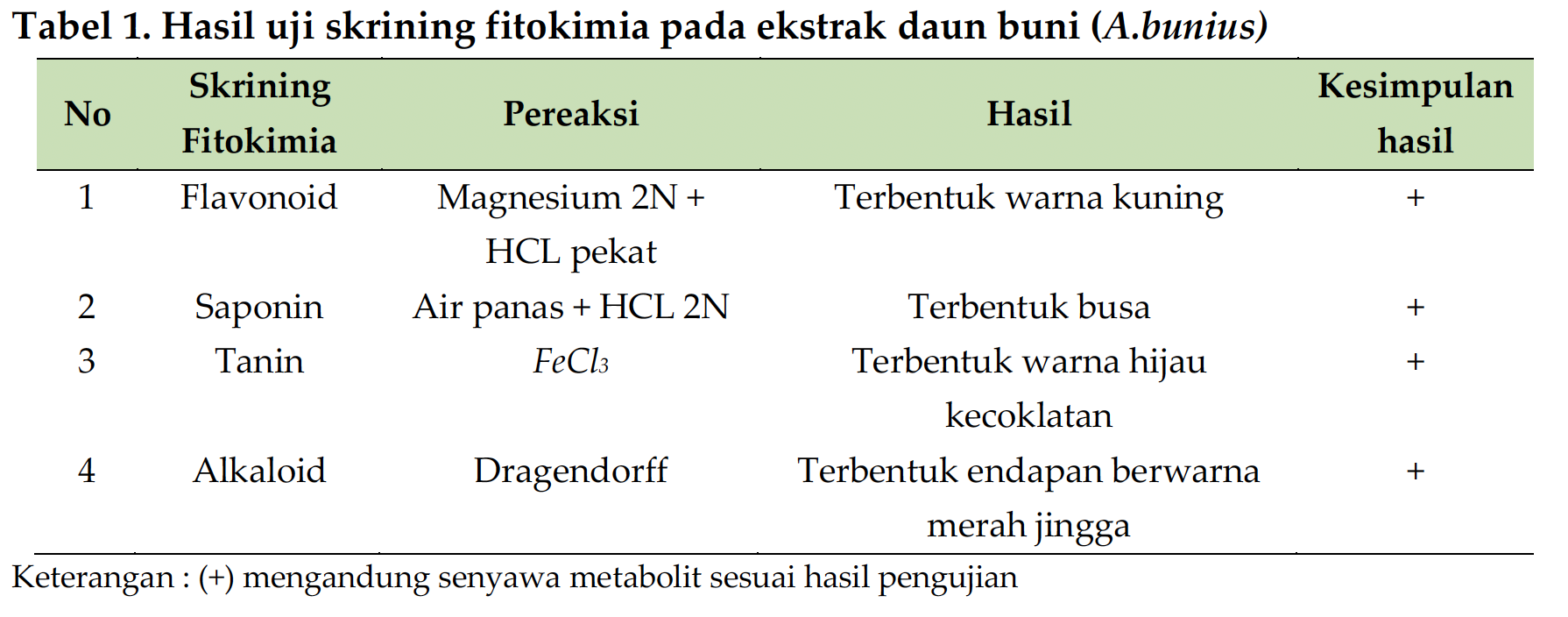
Grade II (A) burn wounds are a common form of skin injury that require proper management to accelerate the healing process and prevent complications. The use of natural products as alternative topical therapies continues to be developed because they are considered safer and possess diverse biological activities. Buni leaves (Antidesma bunius (L.) Spreng) are known to contain bioactive compounds such as flavonoids, tannins, saponins, and alkaloids that potentially support skin tissue regeneration. This study aimed to grade II (A) burn wounds in male white mice (Mus musculus). This study employed an experimental method with a post-test only control group design. The animals were divided into five groups: negative control, positive control (Bioplacenton®), and treatment groups receiving buni leaf extract ointment at concentrations of 2.5%, 5%, and 10%. Grade II (A) burns were induced on the dorsal area of the mice, followed by treatment according to each group. Observations were conducted for 14 days by measuring wound diameter reduction and percentage of wound healing. The data were analyzed statistically using One Way ANOVA followed by a post hoc test to determine differences between treatment groups. The results showed that all concentrations of buni leaf extract ointment accelerated burn wound healing compared to the negative control, with the 10% concentration demonstrating the highest effectiveness and a statistically significant difference (p<0.05). It can be concluded that the 96% ethanolic extract ointment of buni leaves has the potential to be developed as a natural topical preparation for grade II (A) burn therapy.
determine the effectiveness of a 96% ethanolic extract ointment of buni leaves in accelerating the healing of
References
[1]. Deddy Saputra. (2023). Tinjauan komprehensif tentang luka bakar: Klasifikasi, komplikasi dan penanganan.
[2]. Saraswati, M. (2024). Uji aktivitas penyembuhan luka bakar salep ekstrak etanol buah parijoto (Medinilla speciosa) pada punggung kelinci. Pratama Medical Journal Kesehatan, 3(2).
[3]. Waladani, et al. (2021). Peningkatan pengetahuan dan keterampilan kader kesehatan masyarakat dalam pertolongan pertama dengan kasus luka bakar.
[4]. Zwierello, W., Piorun, K., Skórka-Majewicz, M., Maruszewska, A., Antoniewski, J., & Gutowska, I. (2023). Burns: Classification, pathophysiology, and treatment: A review. International Journal of Molecular Sciences, 24.
[5]. Sukmawan, Y. P., Alifiar, I., Nurdianti, L., & Ningsih, W. R. (2021). Wound healing effectivity of the ethanolic extracts of Ageratum conyzoides L. leaf (white and purple flower type) and Centella asiatica and astaxanthin combination gel preparation in animal model. Turkish Journal of Pharmaceutical Sciences, 18(5), 609–615.
[6]. Falsianingrum, M., Retnaningsih, A., & Feladita, N. (2023). Uji efektivitas antiinflamasi dalam sediaan salep lidah buaya (Aloe vera L.) terhadap kelinci jantan (Oryctolagus cuniculus). Jurnal Analisis Farmasi, 8(1).
[7]. Nadia, P., Meilina, R., Astryna, S. Y., & Rahmi, N. (2024). Uji aktivitas salep ekstrak etanol daun balakacida (Chromolaena odorata) terhadap penyembuhan luka bakar pada mencit putih (Mus musculus). Journal of Healthcare Technology and Medicine, 10.
[8]. Wijayantini, R., Cahyaningsih, R., & Permatasari, A. N. (2019). Efektivitas salep ekstrak etanol 70% daun pandan wangi terhadap penyembuhan luka bakar pada mencit putih jantan. Fitofarmaka Jurnal Ilmiah Farmasi, 8(1), 30–38.
[9]. Ayu, D., Kumaradewi, P., Subaidah, W. A., & Andayani, Y. (2021). Phytochemical screening and antioxidant activity test of ethanol extract of buni leaves (Antidesma bunius L. Spreng) using DPPH method. 7(2).
[10]. Zulkefli, N., Nur, C., Che, M., Sayuti, N. H., Kamarudin, A. A., Saad, N., et al. (2023). Flavonoids as potential wound-healing molecules: Emphasis on pathways perspective.
[11]. Astuti, D. P., & Fadhilah, A. (2020). Effectiveness of healing second degree burns gel preparation of bilimbi extract (Averrhoa bilimbi L.). JPS, 2025(2), 903–912.
[12]. Julita, T. E., & Maulana, I. (2024). Formulation and evaluation of burn gel preparations of suruhan herb leaf extract (Peperomia pellucida) in Bogor City. Jurnal Farmasi Kryonaut, 3(1).
[13]. Septiningrum, C. H., Ariastuti, R., & Ahwan. (2024). Uji skrining fitokimia ekstrak etanol 96% daun markisa ungu (Passiflora edulis Sims). Jurnal Farmasi SYIFA, 2(2), 37–41.
[14]. Purwanti, N. U., Luliana, S., & Sari, N. (2018). Pengaruh cara pengeringan simplisia daun pandan (Pandanus amaryllifolius) terhadap aktivitas penangkal radikal bebas DPPH. 1(2), 63–72.
[15]. Rifkia, V., & Revina, R. (2023). Pengaruh variasi bahan: Pelarut dan lama ekstraksi ultrasonik dari ekstrak daun kelor terhadap rendemen dan kadar total fenol. 15, 94–100.
[16]. Adriana, U. H., Nofita, & Marcelia, S. (2024). Uji aktivitas kombinasi ekstrak etanol daun kemangi (Ocimum × africanum Lour.) dan pandan wangi (Pandanus amaryllifolius Roxb.) sebagai antibakteri pada Salmonella typhi. Jurnal Ilmu Kedokteran dan Kesehatan, 11(1), 185–196.
[17]. Rahmawati, Y., Febrianti, I., Priadi, D. F., & Rachmaniah, O. R. (2023). Food colorant from natural sources: Suji leaves (Pleomele angustifolia) and dragon fruit peel (Hylocereus sp.). 4(1), 1–8.
[18]. Rahadyana, R. Z., Artini, K. S., & Wardani, T. S. (2024). Uji aktivitas antioksidan ekstrak biji bunga matahari (Helianthus annuus L.) dengan metode DPPH. Jurnal Kesehatan Tambusai, 5(9), 8049–8056.
[19]. Rahimah, S., Salampe, M., Syamid, A. G., Ismail, I., & Nisa, M. (2023). Uji aktivitas ekstrak etanol daun bidara laut (Strychnos ligustrina Blume) terhadap penyembuhan luka bakar pada kelinci (Oryctolagus cuniculus). MEDFARM: Jurnal Farmasi dan Kesehatan, 12(2), 220–228.
[20]. Hati, M. P., Pratama, R. R., Ittiqo, D. H., Nurbaety, B., & Sugara, T. H. (2024). Uji aktivitas gel ekstrak etanol kulit batang pulai (Alstonia scholaris) pada kelinci sebagai obat luka bakar. Jurnal Pharm, 2(2), 99–107.
[21]. Susanti, S., Primadiamanti, A., & Ulfa, A. M. (2022). Evaluasi fisik sediaan salep ekstrak akar putri malu (Mimosa pudica L.) dengan variasi konsentrasi. Jurnal Farmasi Malahayati, 5(2), 188–202.
[22]. Setyaningsih, R., Prabandari, R., & Febrina, D. (2022). Formulasi dan evaluasi salep ekstrak etanol bunga kecombrang (Etlingera elatior (Jack) R.M.Sm.) pada penghambatan Propionibacterium acnes. Pharm Genius, 1(1), 1–11.
[23]. Ohee, T. A. E., Puspitasari, K., & Wibowo, J. T. (2024). Formulasi dan evaluasi salep ekstrak daun singkong (Manihot esculenta Crantz) sebagai obat luka bakar. SENTRI: Jurnal Riset Ilmiah, 3(10), 4707–4717.
[24]. Usman, Y., Hasma, & Panaungi, A. N. (2024). Uji aktivitas salep ekstrak etanol daun ubi jalar ungu (Ipomoea batatas L.) untuk luka bakar pada kelinci. Jurnal MIPA, 13(2), 99–104.
Downloads
Published
Issue
Section
License
Copyright (c) 2026 I Made Agus Sunadi Putra, Ni Komang Ayu Trias Pradnyawati, I Gusti Agung Ayu Kusuma Wardani

This work is licensed under a Creative Commons Attribution-NonCommercial 4.0 International License.